Manufacturing
Apply AI to improve production quality, operational efficiency and resilience.
Examples: Quality inspection · Predictive maintenance · Process optimization




 SAIGON AI HUB
Co-founded by VNG Group and VNUHCM, Saigon AI Hub brings researchers, academics and industry experts together to advance AI research in Vietnam. Through shared infrastructure, scientific guidance and collaboration, SAIH supports research talent and the development of ideas with practical value.


Saigon AI Hub (SAIH) brings researchers, academics and domain experts together to advance AI research and explore its practical value.
We connect research talent with expertise, infrastructure and opportunities to develop rigorous AI research with practical value.

We support scientific contributions and the development of research ideas into practical applications.
Develop clear research questions, test methods against relevant baselines and produce evidence that others can assess and build on.
Work with domain experts to test whether research outcomes address the intended problem, using relevant data and agreed evaluation criteria.
Share knowledge and contribute to the community.
Join by choice. Collaborate with shared purpose.
Establish transparent agreements on research contributions, intellectual property and the use of results.
Uphold research ethics and academic integrity.
Follow national regulations and the applicable legal framework.
SAIH brings together infrastructure, scientific guidance and community connections to help researchers develop, test and share their work.
Workspace at VNG Campus and access to computing infrastructure support research and experimentation. Project resources are agreed according to research needs.
Research guidance from SAIH’s Executive Board and opportunities to exchange ideas with experts from universities, industry, and partner organizations.
Meet-ups, workshops and peer learning connect research teams with experts and new perspectives.
Opportunities to share research through publications, conferences and community events, and to connect with academic and industry partners.
SAIH’s collaboration with Google Labs through its AI Futures Fund creates opportunities for technology access and technical exchange, alongside the research and industry networks of VNG Group and VNUHCM.
Explore the partnershipFor Cohort 2, Saigon AI Hub connects real-world challenges from enterprises and the public sector with strong AI research teams, supporting their collaboration through shared resources, agreed milestones and real-world validation.
We begin by selecting meaningful challenges with committed owners, then invite research teams to propose approaches to address them.
Apply AI to improve production quality, operational efficiency and resilience.
Examples: Quality inspection · Predictive maintenance · Process optimization
Develop AI approaches that improve productivity, support decisions and enable more sustainable agricultural practices.
Examples: Crop monitoring · Disease detection · Yield prediction
Advance AI research that strengthens climate monitoring, adaptation and environmental resilience.
Examples: Climate intelligence · Disaster risk · Environmental monitoring
Connect AI research with challenges of national significance, developing solutions with the potential for broad adoption across Vietnam.
Identify meaningful problems with committed owners.
Agree on the problem, domain support and conditions for research.
Invite research teams to propose approaches to selected briefs.
Select teams with the research depth and expertise each challenge needs.
Enterprises, government agencies and public-sector organizations with a meaningful problem and a commitment to work toward a solution.
AI research groups and interdisciplinary teams with the scientific depth and technical capability to address selected challenges.
Research Call opens in December 2026. Selected challenge briefs and application requirements will be published then.
Cohort 2 will select projects with scientific outputs and real-world validation as shared goals.
Establish the research question, baseline, data requirements and technical approach.
Direction review
Conduct experiments and develop scientific outputs, prototypes or technology.
Progress review
Evaluate scientific and technical results with domain experts and evidence from the intended application context.
Outcome review
Bring a real-world problem in one of the four priority areas.
Clarify scope, confirm owner commitments and prepare research-ready briefs.
Publish selected challenges and invite research teams to propose approaches.
Assess proposals, meet shortlisted teams and match them with Challenge Owners.
Agree on scope and milestones, then begin the six-month research cycle.
Have a meaningful problem for AI research?
Bring a ChallengeLaunched in March 2026, Cohort 1 explored diverse AI research topics and developed early applications. Cohort 2 builds on this foundation by bringing problem owners and domain experts into the research process from the start.

Scientific papers, publications, and contributions to international research conferences.

Early demonstrations and working prototypes that provide a basis for further testing and development in real-world settings.
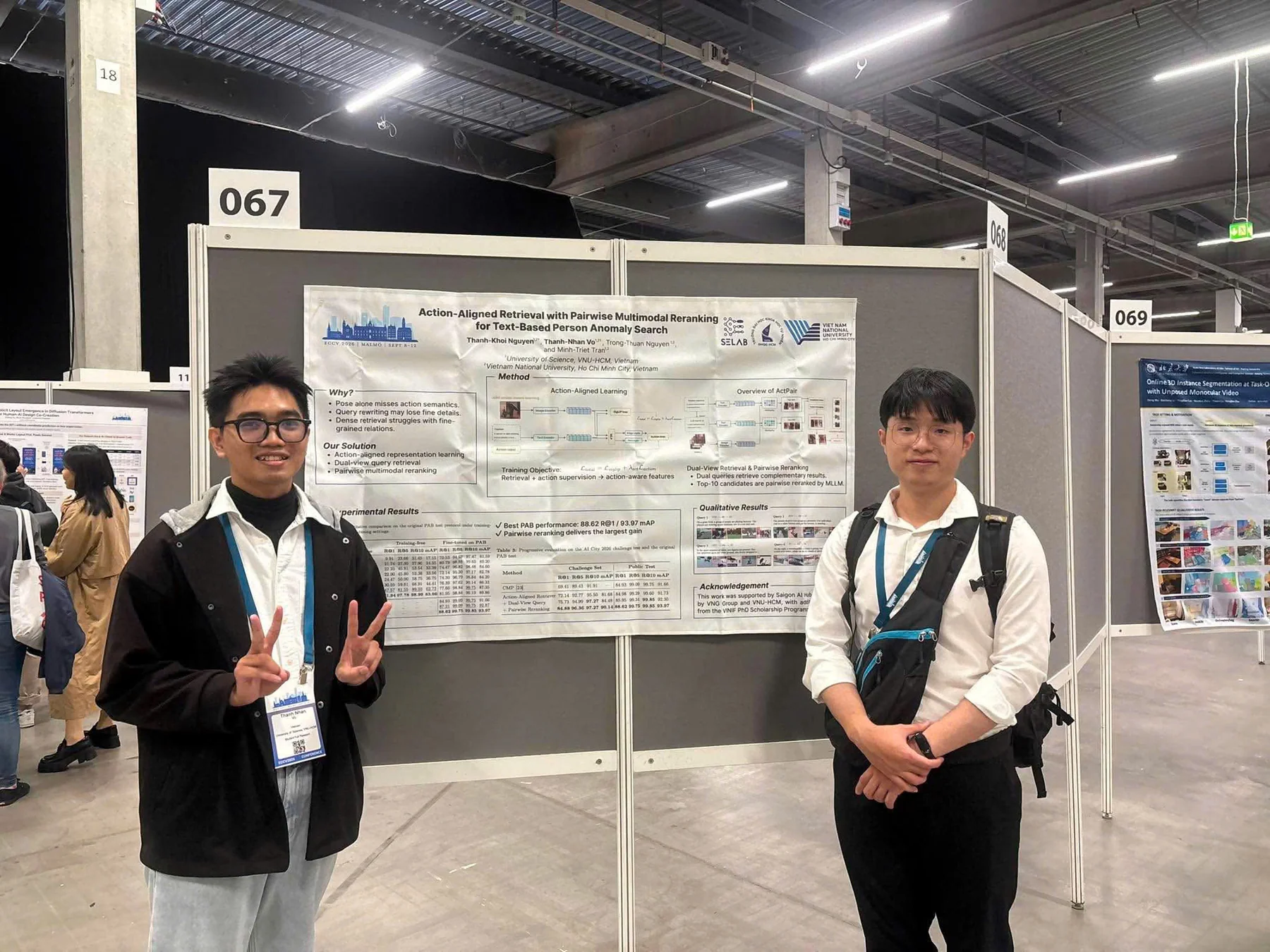
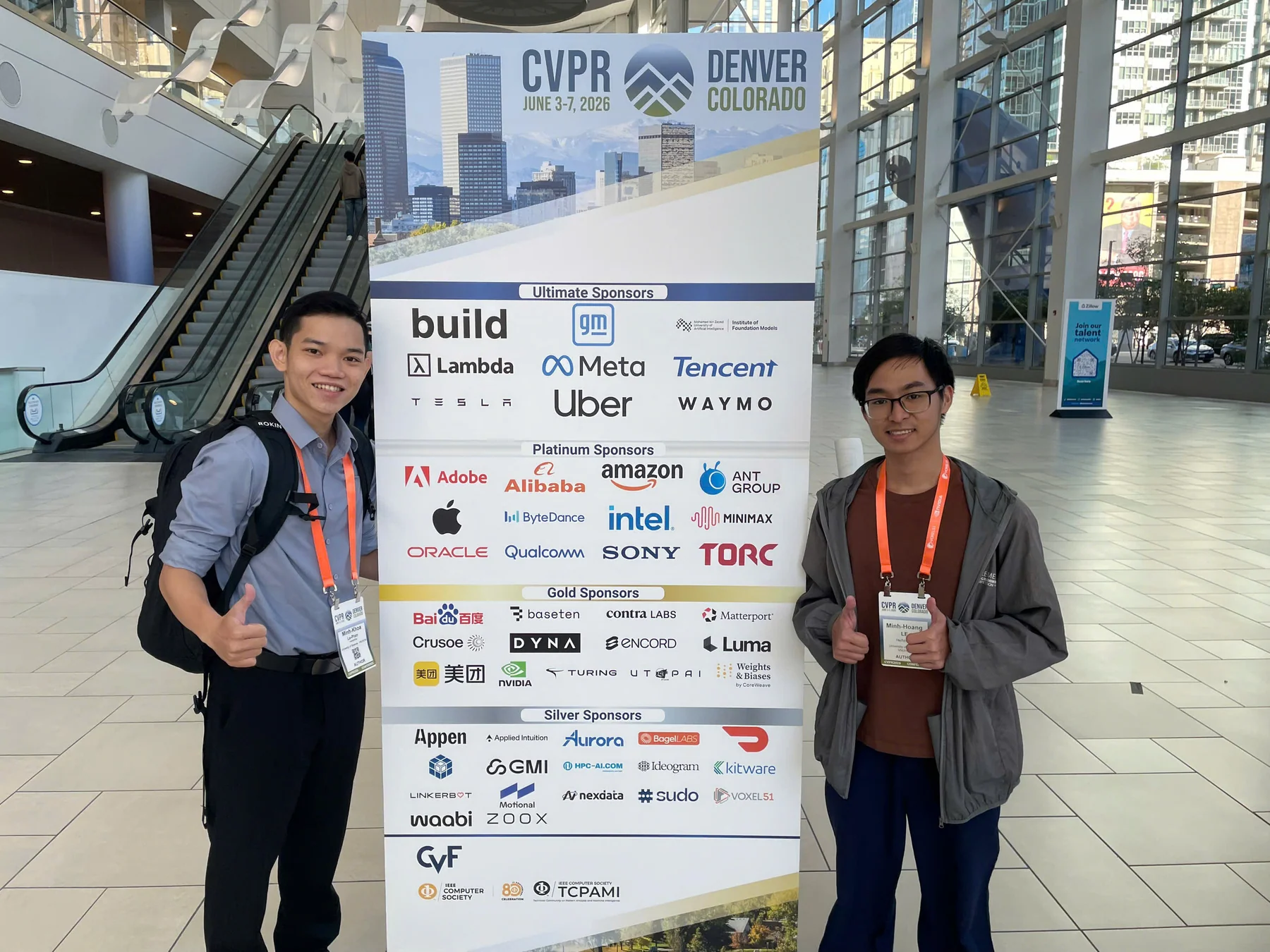
International recognition The Deepfake Detection team placed fourth in the NTIRE 2026 Deepfake Detection Challenge, with a paper accepted at the NTIRE workshop at CVPR 2026.
Research exchange Lumina-HT2 was accepted at ICMR 2026. The Vietnamese Multimodal Emotion team had a paper accepted and presented at FLINS–ISKE.
Early working prototypes Teams developed early applications including Vietnamese speech separation, multimedia retrieval and AI-powered virtual reality experiences.
Closer to application Teams demonstrated prototypes and discussed user needs, product roadmaps, and commercialization potential with industry experts.
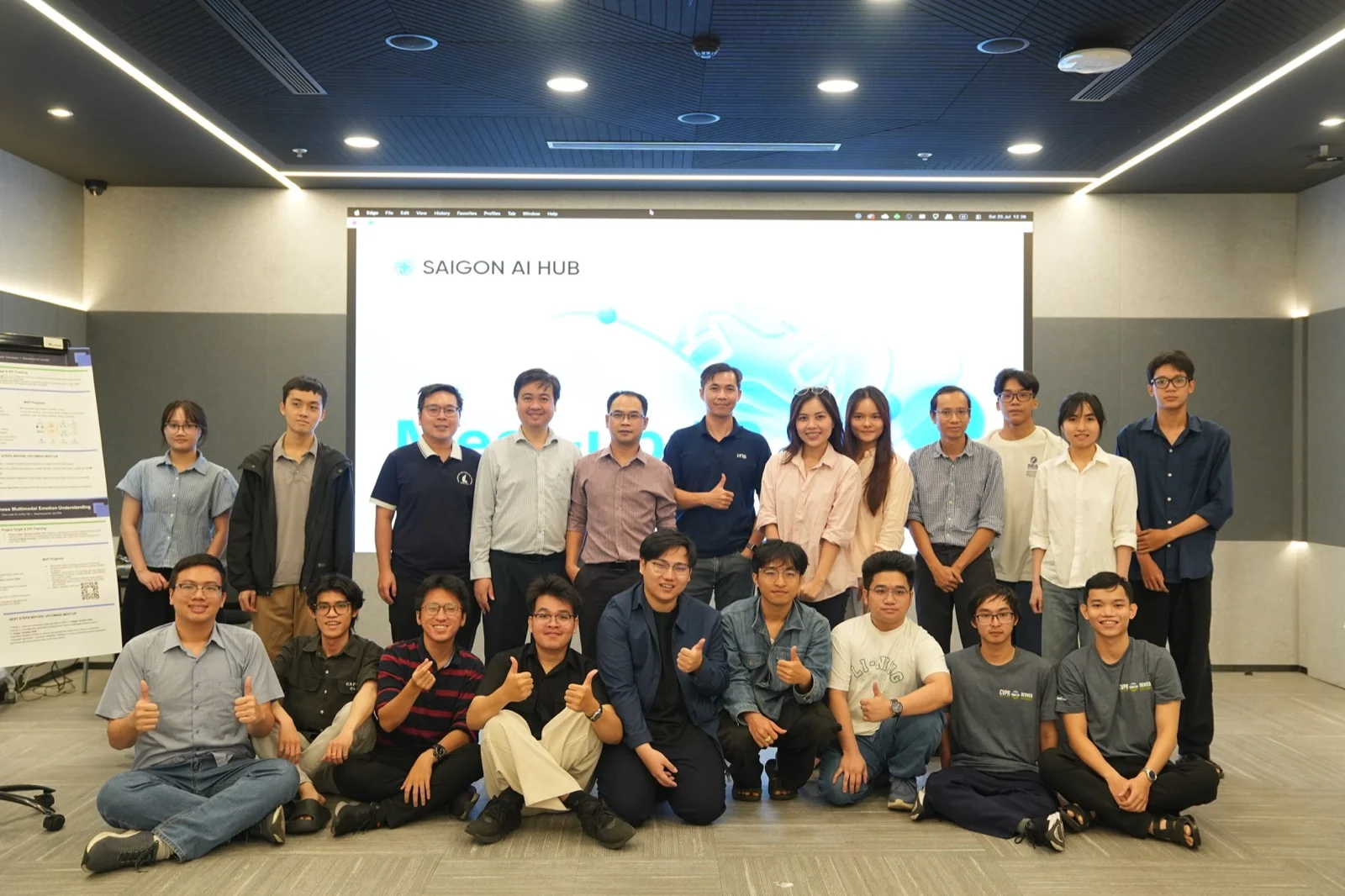
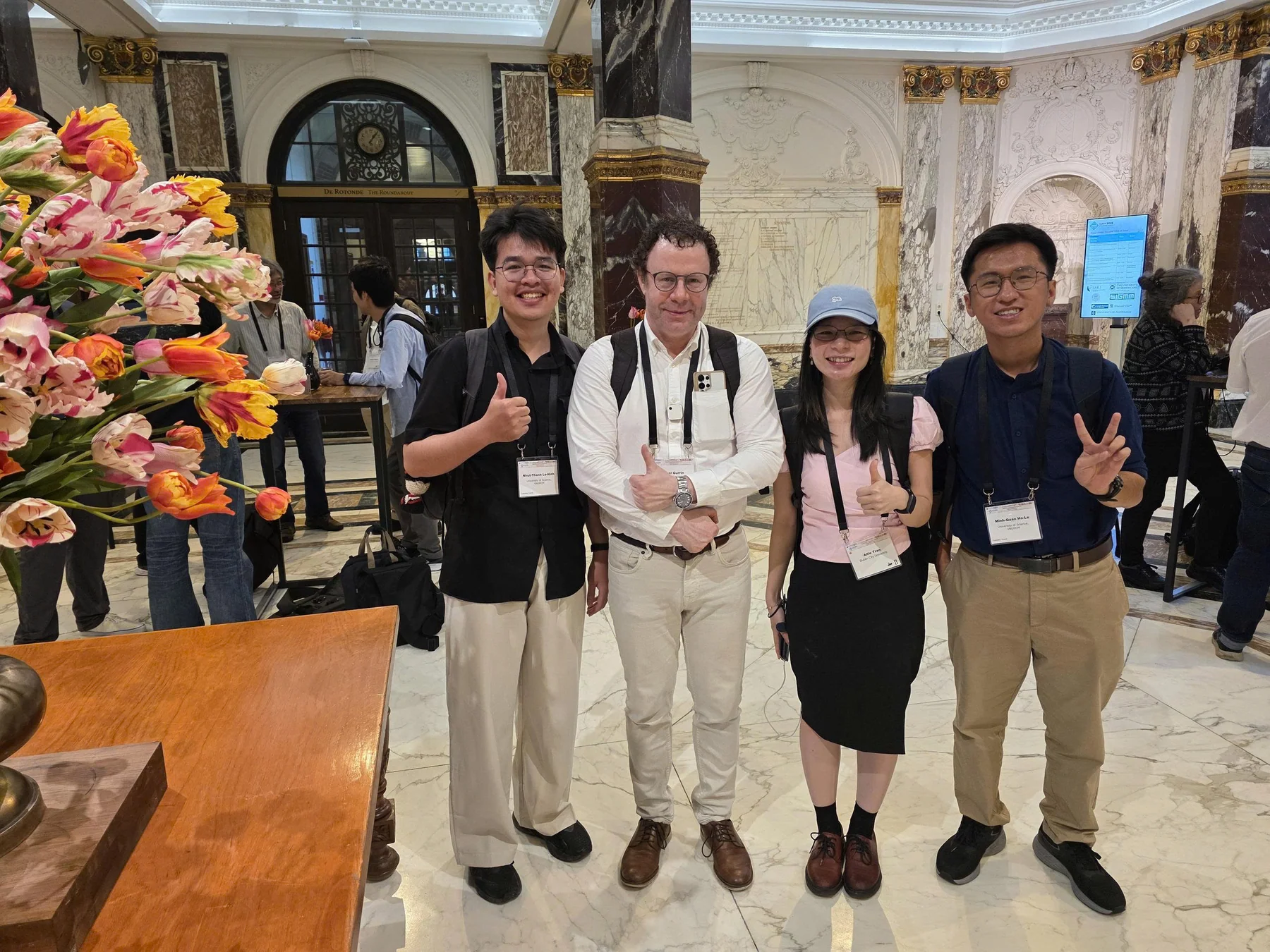
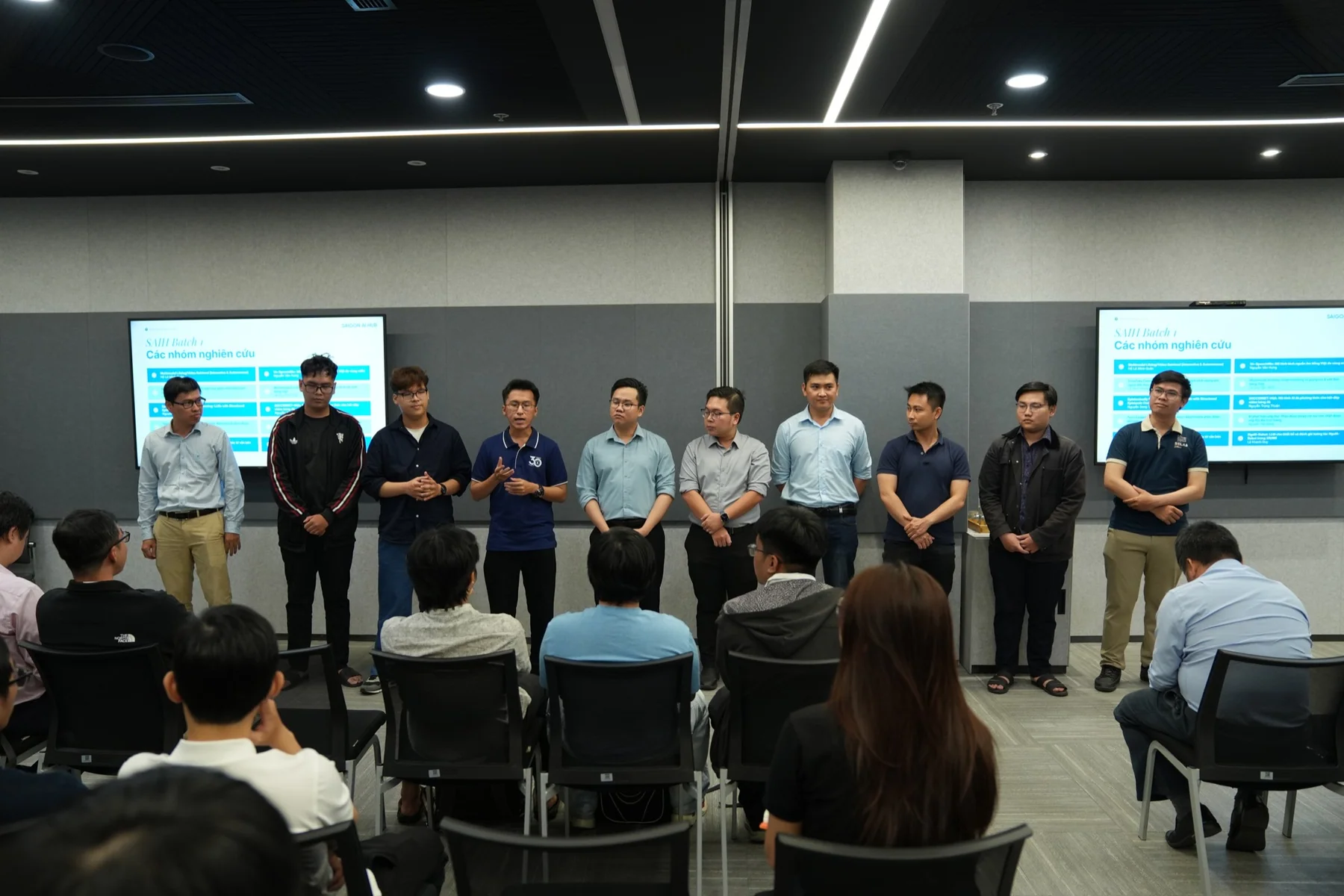
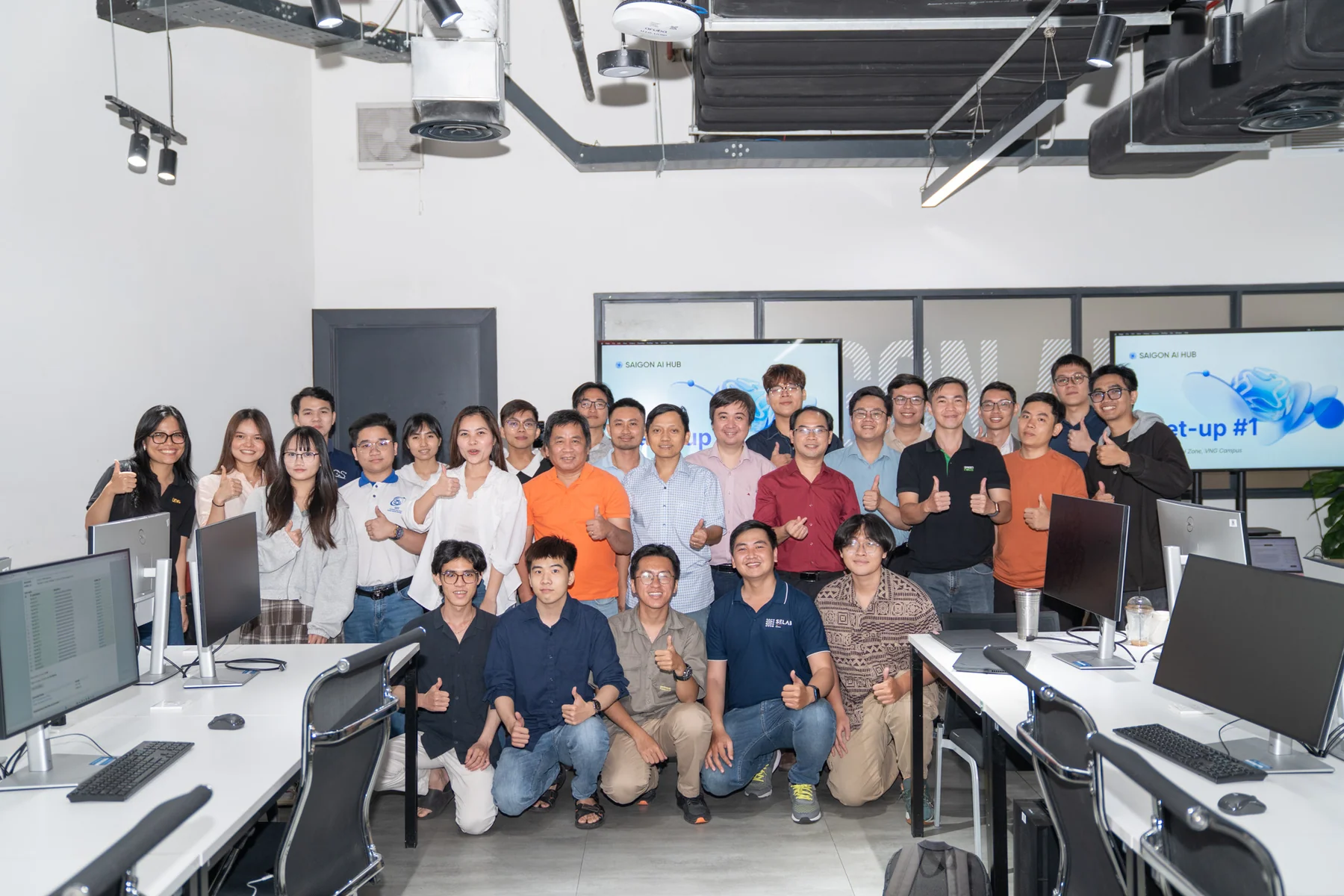
From research meet-ups and poster discussions to Live Tinkering sessions with industry experts, SAIH teams share progress, learn from one another, and bring research outcomes closer to real-world applications.

Contribute a meaningful problem, domain expertise and a setting for real-world testing.
Submit a ChallengeExplore selected challenges when the Research Call opens in December 2026.
Follow SAIH on LinkedIn